UNESCO and World Heritage
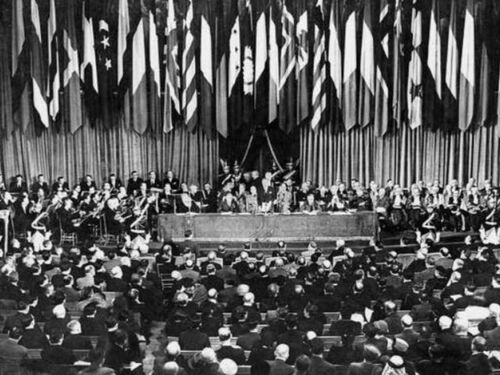
UNESCO stands for ‘United Nations Educational, Scientific and Cultural Organisation’. It is one of 16 specialised agencies of the United Nations and is based in Paris. There are currently 195 member states represented in UNESCO.
This is stated in the preamble to its constitution, which was signed by 37 states in London on 16 November 1945. They learnt the following lesson from the experience of the Second World War: "Peace based solely on political and economic agreements between governments cannot meet with the unanimous, lasting and sincere approval of the peoples of the world. Peace - if it is not to fail - must be anchored in the spiritual and moral solidarity of humanity".
‘Since wars begin in the minds of men, it is in the minds of men that the defenses of peace must be constructed.'
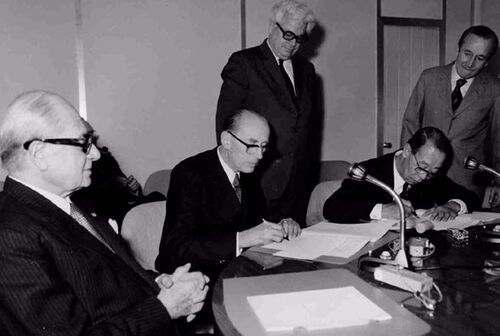
The international campaign to save Abu-Simbel was the first step towards the ‘Convention Concerning the Protection of the World Cultural and Natural Heritage’ (World Heritage Convention), which was adopted by UNESCO in 1972. This international agreement is based on the revolutionary idea of entrusting humanity with the protection and preservation of outstanding cultural achievements and natural phenomena of outstanding universal value.
The World Heritage List includes a total of 1223 sites (state 2024). Of these, 962 are cultural heritage sites and 231 are natural heritage sites. 49 sites are transboundary or transnational.
Links
AUSTRIA
Austrian UNESCO Commission
FRANCE
French UNESCO Commission
GERMANY
German UNESCO Commission
ITALY
Italian UNESCO Commission
SLOVENIA
Slovenian UNESCO Commission
SWITZERLAND
Swiss UNESCO Commission
INTERNATIONAL
UNESCO