CH-VD-13
Mur, | Chenevieres de Guevaux I
Short Description
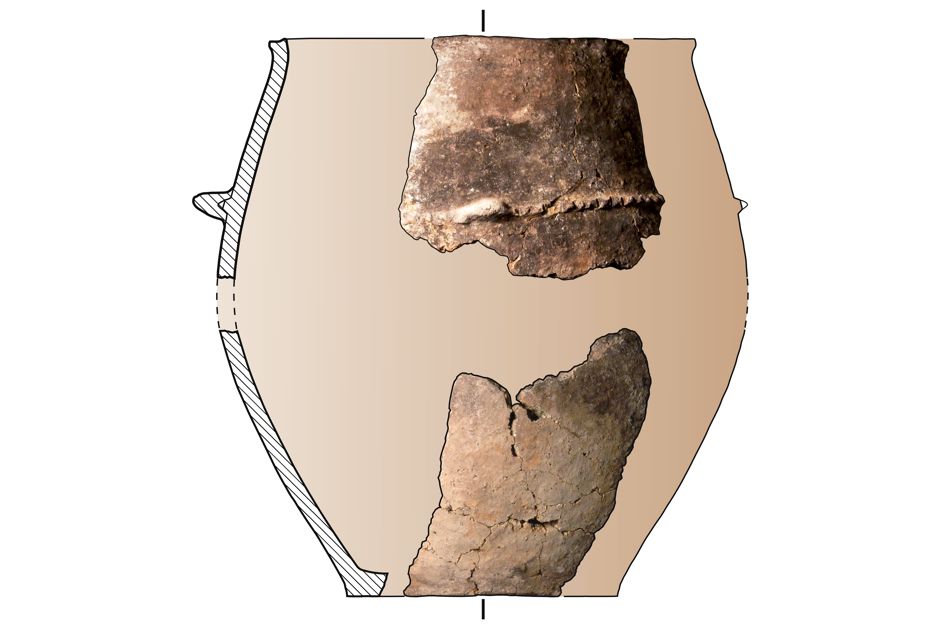
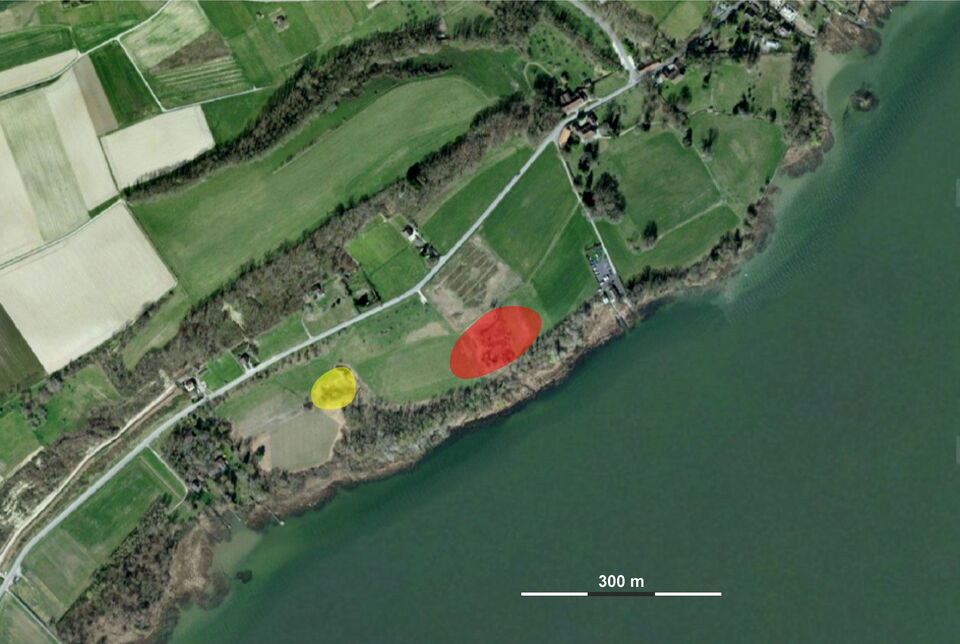
This settlement was unknown before 2003. It was during archaeological surveys prior to the renaturation of this wetland that two new pile dwelling sites were discovered. To the east, the better preserved of the two (Chenevières de Guévaux I) has been attributed to the Early Bronze Age based on archaeological finds and dendrochronological dating. The very rich archaeological layer belongs to a single phase of occupation. A survey yielded shards belonging to a large jar with impressed cord handles. A rim of fine ceramics is also part of a small Les Roseaux-type cup. The remains of another coastal village further west (Chenevières de Guévaux II) belong to an older occupation, attributed to the late Middle Neolithic period, around 3400 BCE.
Special Features & Highlights
This is one of the few coastal settlements on Lake Murten dating back to the Early Bronze Age. Its exceptional state of preservation is due to the alluvial deposits and sand, mainly molassic sand, that accumulated at the foot of Mont Vully.
Pile Dwellings up close
Archaeological artefacts collected from pile dwelling sites on the shores of Lake Geneva are on display at the Cantonal Museum of Archaeology and History in Lausanne.
Musée cantonal d'archéologie et d'histoire
Palais de Rumine
Place de la Riponne 6
1005 Lausanne
+41 21 316 34 30
to the website

Bronze Age
End of the Early Bronze Age, approx. 1660/1659 B.C.
Lake Morat
430 m.a.s.l.
Size of the site:
1,04 ha / approx. 1-2 soccer pitches
Size of the bufferzone:
9,73 ha / approx. 14 football pitches