DE-BY-01
Weil, | Pestenacker
Short Description
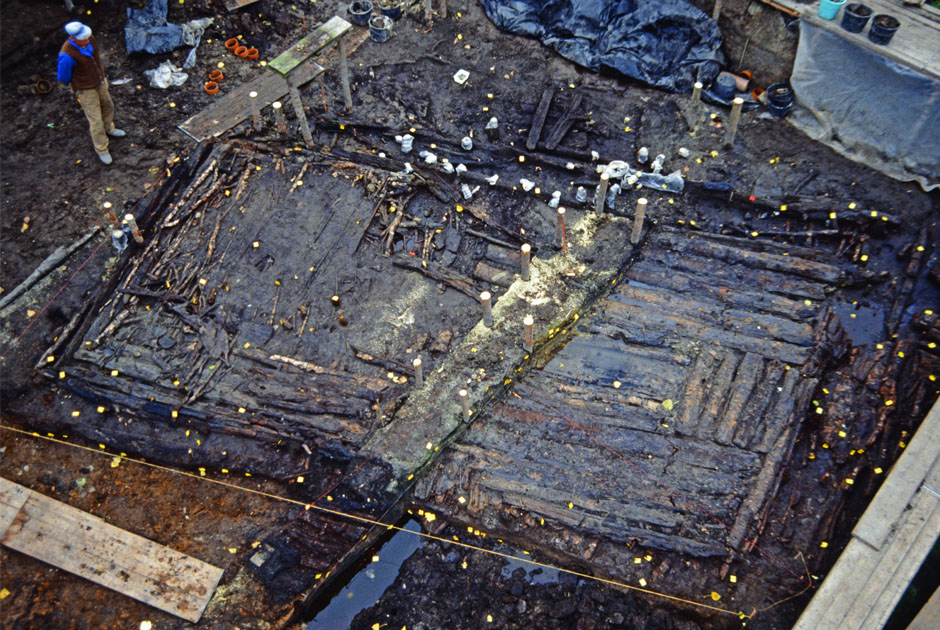
The Neolithic settlement of Pestenacker was discovered in the course of re-routing theLoosbach brook in 1934. From 1988 to 1993 and 2000 to 2004, large-scale excavations were carried out at the site. Like in the nearby settlement of Unfriedshausen, the material culture of the inhabitants belongs to the Neolithic Altheim group. The contruction of Pestenacker postdates Unfriedshausen, which suggests that the village at Pestenackermay have replaced the Unfriedshausen as its successor. The Neolithic site of Pestenacker is known for its extraordinary good preservation of wood, textiles and plant residues.
Special Features & Highlights
Full-scale reconstruction of a neolithic house. The degree of preservation of prehistoric wood, textiles and plant remains at this site is extraordinary.
Pile Dwellings up close
Steinzeitdorf Pestenacker
Hauptstr. 100
86947 Pestenacker-Weil
to the website
steinzeitdorf-pestenacker@lra-ll.bayern.de
Südschwäbisches Archäologie-Museum
Hermelestrasse 4,
87719 Mindelheim
to the website

Neolithic
3500 – approx. 3450 B.C.
former side arm of the Lech/Loosbach
561 m.a.s.l.
Size of the site:
0,57 ha / nearly 1 football pitch
Size of the bufferzone:
3,66 ha / approx. 5 football pitches